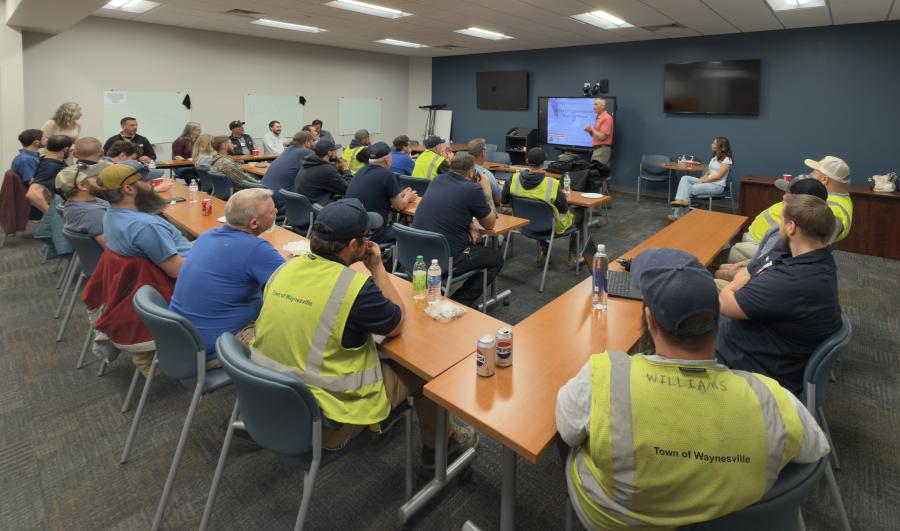
On Thursday, March 26, the Town of Waynesville hosted its annual Stormwater Training, reinforcing a strong commitment to environmental stewardship and regulatory compliance.
This year’s training was a collaborative effort between the Town’s Developmental Services Department, which administers the program, and North Carolina Cooperative Extension, led by Watersheds and Water Quality Area Specialized Agent Mitch Woodward. The initiative also included participation from multiple Town departments and leadership from the Town of Maggie Valley, highlighting a regional, unified approach to stormwater management.
The training focused on Municipal Separate Storm Sewer System (MS4) permit compliance, with emphasis on the six Minimum Control Measures (MCMs). Key areas included pollution prevention through good housekeeping practices, illicit discharge detection and elimination (IDDE),reporting mechanisms, fleet maintenance, and post-construction stormwater runoff controls. Participants also received hands-on guidance in Best Management Practices (BMPs), spill response procedures, and infrastructure inspection techniques to reduce pollutants entering the stormwater system.
As part of the training, Public Works and Developmental Services staff, alongside Mr. Woodward, conducted an informal audit of Public Works facilities. This proactive review identified opportunities to enhance stormwater management practices and ensure continued compliance with state and federal requirements.
This effort reflects a strong, collaborative commitment to protecting water quality and maintaining compliance through continuous improvement and shared expertise.
Waynesville continues to set the standard for proactive stormwater management in Western North Carolina, demonstrating leadership through action, collaboration, and a forward-thinking approach to protecting its natural resources. This type of initiative not only strengthens regulatory compliance with the Town’s NPDES Permit, but also reinforces the Town’s dedication to serving its community and preserving the environment for future generations.